After a short visit in Fes, Sam and I were pretty anxious to get down to the Sahara and do what all great tourists must do in the desert...ride a camel! A few months ago I somehow got the idea of riding a camel in Morocco locked in my brain. I knew that at some point I had to make it happen or my trip would not be complete. Luckily, camels are Sam's favorite animal, so it didn't take much convincing to get him on board with the plan.
We took an 11 hour overnight bus from Fes to Merzouga. Half way through the ride we were pleasantly greeted by our Czech friend Raddik who we met at the hostel in Fes. He had been spending a few days in another city and coincidentally ended up catching the same bus as us! We chatted for a bit before falling into a deep bus slumber.
At six in the morning, the lights in the bus flashed on and we came to a halt. The bus driver yelled, "Merzouga, everyone off." Being abruptly awoken from my sleep I was a bit disoriented, but I became even more so when I realized that it was 6 A.M., completely dark outside and we were parked in the middle of a dirt road lined with about five restaurants in the middle of vast desert nowhereness. The bus was not scheduled to arrive until 7 A.M. and I was convinced that this dirt pullout could not possibly be the Merzouga bus station.
I tried to stay on the bus and go back to sleep, but the driver was persistent and eventually kicked us off. I hesitantly left the bus in complete shock with no idea of what to do next. Luckily, Sam was a bit more functional than me. We had arranged to CouchSurf with a local, but didn't think he would appreciate being called at 6 A.M., and Raddik had already gotten a taxi to meet his CouchSurfing host, so we did what any intelligent two people traveling in Morocco at the wee hours of the morning would do. We wandered a few hundred yards into the desert, got out our sleeping bags and went to sleep on the sand.
We were surrounded by giant red dunes towering over small houses scattered along the horizon, and watched the first hints of sun poke through the darkness from behind a mud and straw style hut. This would be the first of many Moroccan sunrises we would witness. It wasn´t long before we were approached at our “campsite” in the desert by a toothless Moroccan riding his bike through the sand. Of course he had to stop and introduce himself and offered his tour guide services to take us on a camel trek. Either we stick out like a sore thumb or there are just Moroccans hiding out in all crevices of the earth, but to be found in the desert in the first few minutes of daylight is pretty impressive. I am under the impression that there are always a pair of eyes on us, no matter where we are!
After dismissing Abdul, Sam and I began to formulate a plan. We had not heard from our CS host and were getting worried about what we would do for the day/where we would stay. Things ended up falling through with out host, but luckily Raddik´s host invited us to stay with him. We were told to get a taxi and tell him to take us to Jonas´s house. The driver seemed to know exactly what we meant and we were soon on our way! We drove for about ten minutes down a vacated highway, then drove off shoulder and zoomed across the open desert making our own road toward a town in the distance.
The driver dropped us in front of what appeared to be a large mud and straw made villa with chickens, goats and camels freely roaming outside… Jonas´s house. We were promptly greeted by Jonas and Raddik and led to our own private room alongside the house. Jonas brought us mint tea, cookies and a delicious breakfast. We spent the rest of the morning seeing Jonas´s town and walking along the canals in the oasis. Jonas had three family camels and offered to take us into the desert for the night, my dream was coming true!
We spent two hours traversing across the dunes to a camp. Riding atop a huge camel through endless red sand was incredible. Not to mention, I also got to wear a turban…true Arabian style! We watched the sun set over the Algerian border then descended into a valley where the camp was set up consisting of five tents and a small kitchen. There we were met by two other guides and two Spanish girls also on a camel trek. We had a delicious dinner and spent much of the evening gazing at the gorgeous starry night and milky way…by far the best star display I have ever seen!
We woke up early and traversed a hundred yards up a steep dune to see the sunrise, then made the journey back into town. The Sahara trip was an amazing experience…definitely one of the highlights of my trip thus far!
We took an 11 hour overnight bus from Fes to Merzouga. Half way through the ride we were pleasantly greeted by our Czech friend Raddik who we met at the hostel in Fes. He had been spending a few days in another city and coincidentally ended up catching the same bus as us! We chatted for a bit before falling into a deep bus slumber.
At six in the morning, the lights in the bus flashed on and we came to a halt. The bus driver yelled, "Merzouga, everyone off." Being abruptly awoken from my sleep I was a bit disoriented, but I became even more so when I realized that it was 6 A.M., completely dark outside and we were parked in the middle of a dirt road lined with about five restaurants in the middle of vast desert nowhereness. The bus was not scheduled to arrive until 7 A.M. and I was convinced that this dirt pullout could not possibly be the Merzouga bus station.
I tried to stay on the bus and go back to sleep, but the driver was persistent and eventually kicked us off. I hesitantly left the bus in complete shock with no idea of what to do next. Luckily, Sam was a bit more functional than me. We had arranged to CouchSurf with a local, but didn't think he would appreciate being called at 6 A.M., and Raddik had already gotten a taxi to meet his CouchSurfing host, so we did what any intelligent two people traveling in Morocco at the wee hours of the morning would do. We wandered a few hundred yards into the desert, got out our sleeping bags and went to sleep on the sand.
We were surrounded by giant red dunes towering over small houses scattered along the horizon, and watched the first hints of sun poke through the darkness from behind a mud and straw style hut. This would be the first of many Moroccan sunrises we would witness. It wasn´t long before we were approached at our “campsite” in the desert by a toothless Moroccan riding his bike through the sand. Of course he had to stop and introduce himself and offered his tour guide services to take us on a camel trek. Either we stick out like a sore thumb or there are just Moroccans hiding out in all crevices of the earth, but to be found in the desert in the first few minutes of daylight is pretty impressive. I am under the impression that there are always a pair of eyes on us, no matter where we are!
After dismissing Abdul, Sam and I began to formulate a plan. We had not heard from our CS host and were getting worried about what we would do for the day/where we would stay. Things ended up falling through with out host, but luckily Raddik´s host invited us to stay with him. We were told to get a taxi and tell him to take us to Jonas´s house. The driver seemed to know exactly what we meant and we were soon on our way! We drove for about ten minutes down a vacated highway, then drove off shoulder and zoomed across the open desert making our own road toward a town in the distance.
The driver dropped us in front of what appeared to be a large mud and straw made villa with chickens, goats and camels freely roaming outside… Jonas´s house. We were promptly greeted by Jonas and Raddik and led to our own private room alongside the house. Jonas brought us mint tea, cookies and a delicious breakfast. We spent the rest of the morning seeing Jonas´s town and walking along the canals in the oasis. Jonas had three family camels and offered to take us into the desert for the night, my dream was coming true!
We spent two hours traversing across the dunes to a camp. Riding atop a huge camel through endless red sand was incredible. Not to mention, I also got to wear a turban…true Arabian style! We watched the sun set over the Algerian border then descended into a valley where the camp was set up consisting of five tents and a small kitchen. There we were met by two other guides and two Spanish girls also on a camel trek. We had a delicious dinner and spent much of the evening gazing at the gorgeous starry night and milky way…by far the best star display I have ever seen!
We woke up early and traversed a hundred yards up a steep dune to see the sunrise, then made the journey back into town. The Sahara trip was an amazing experience…definitely one of the highlights of my trip thus far!
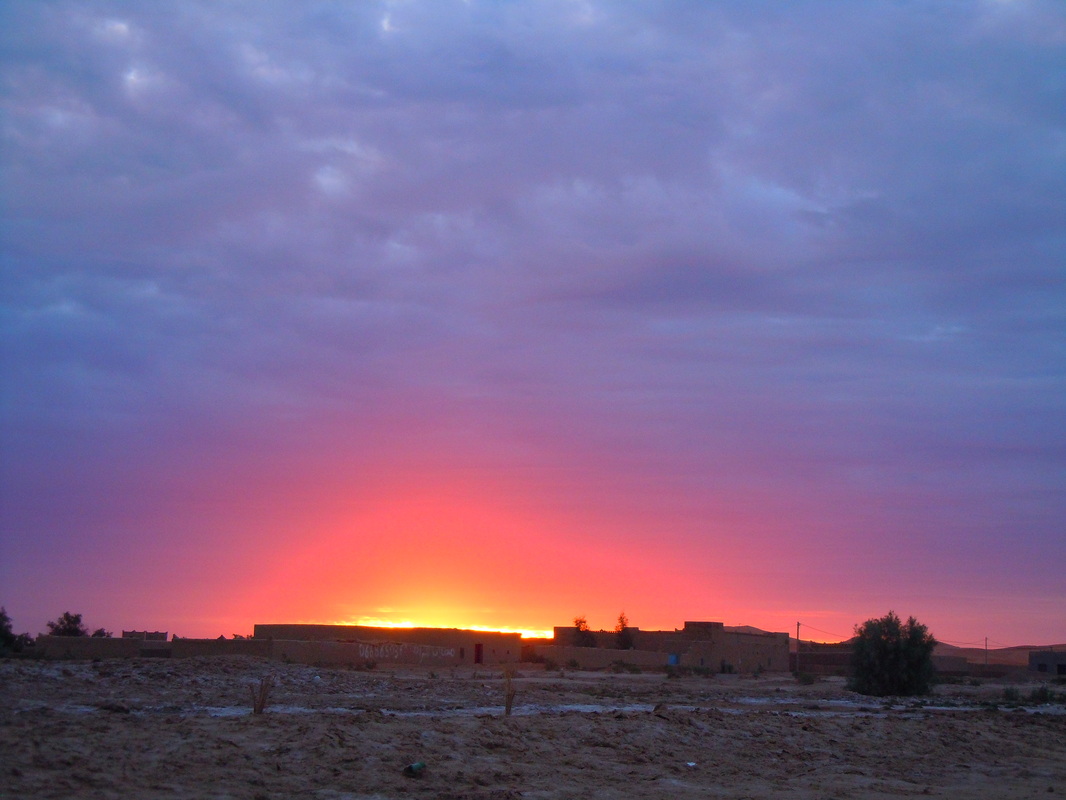
Sunrise in the desert
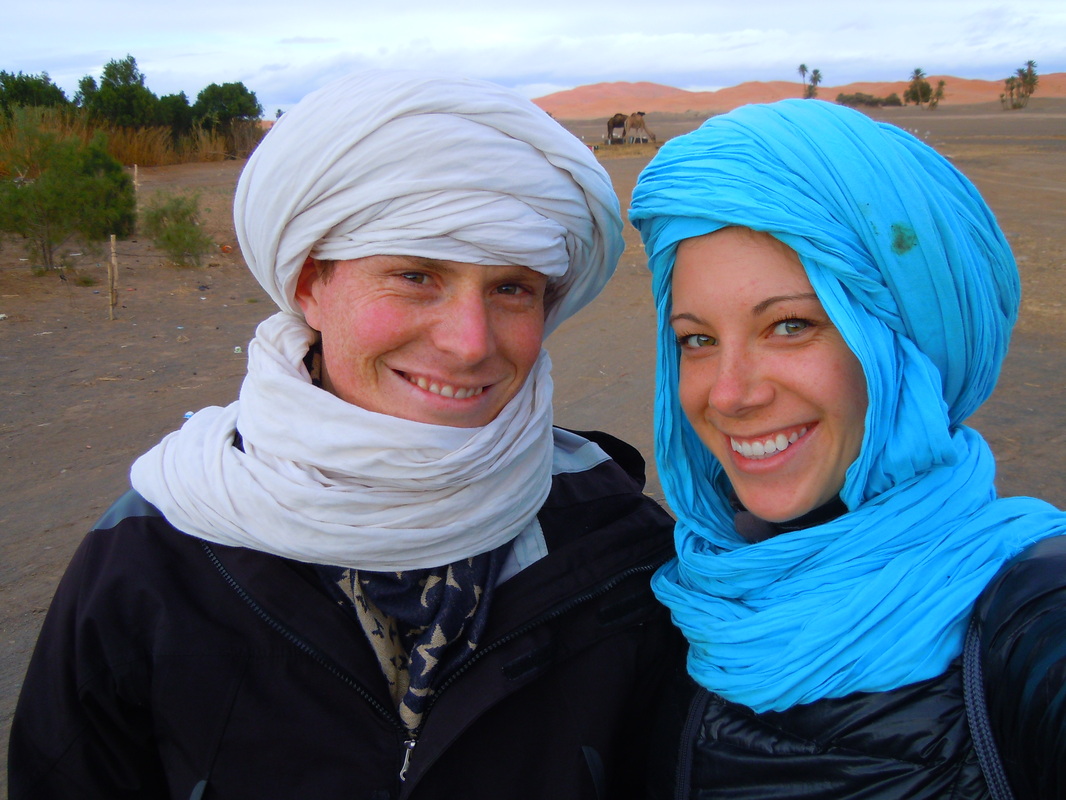
Sam and me ready to face the extreme desert elements
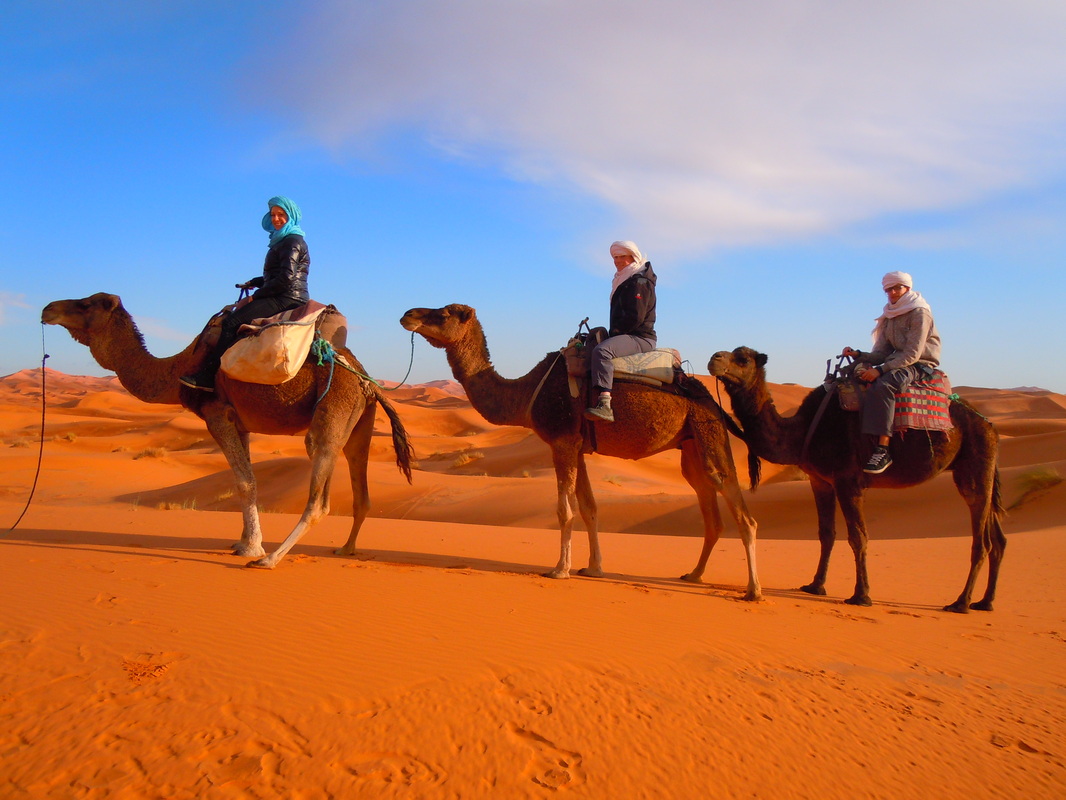
The beginning of our camel safari! Me, Sam and Raddick
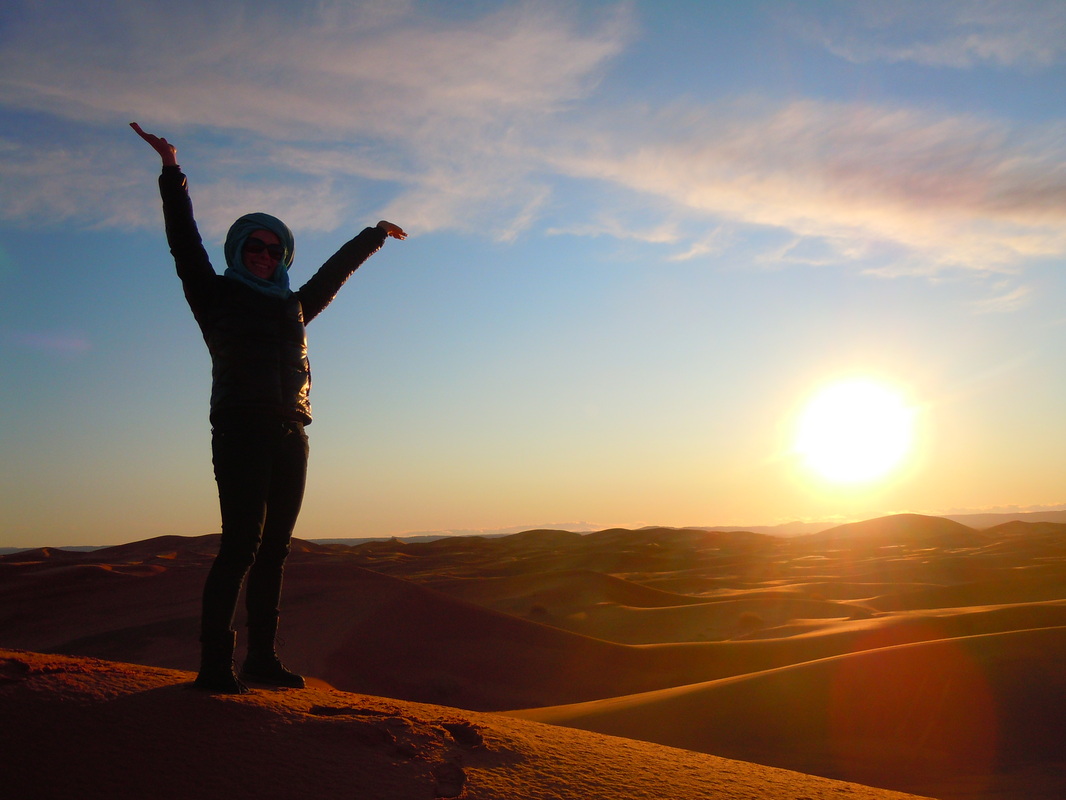
Is the turban a good look for me?
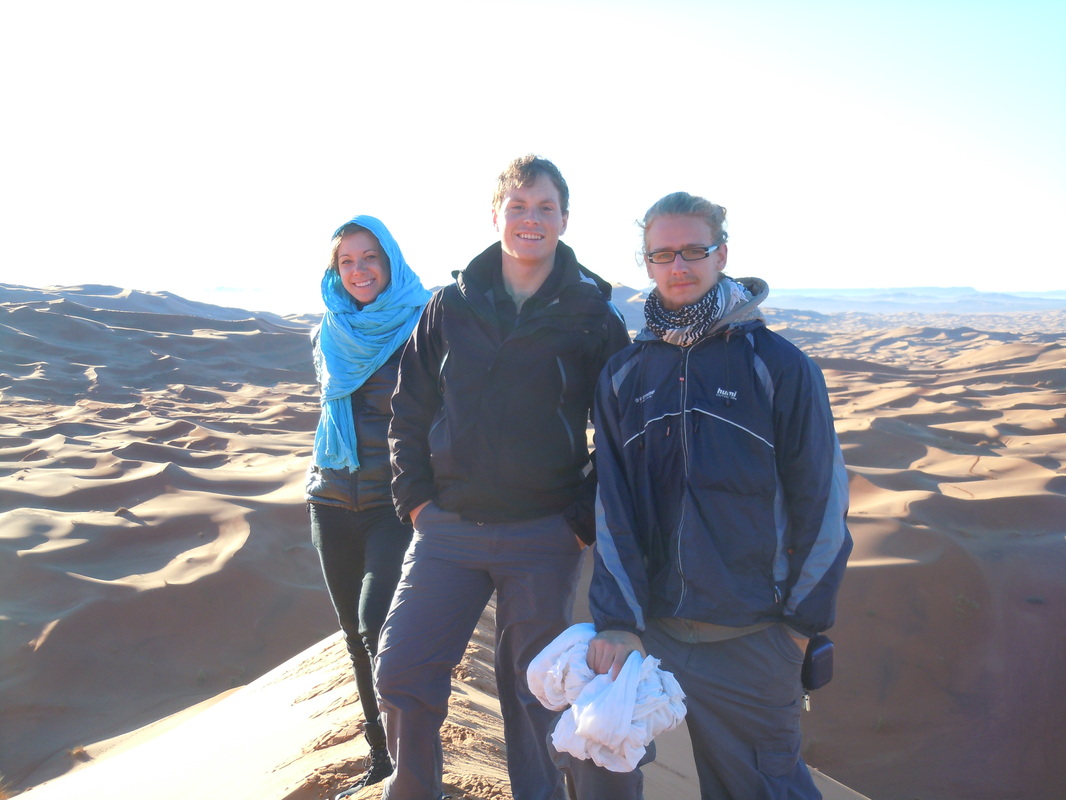
Checking out the sunrise from the top of a dune. Me, Sam and Raddik.
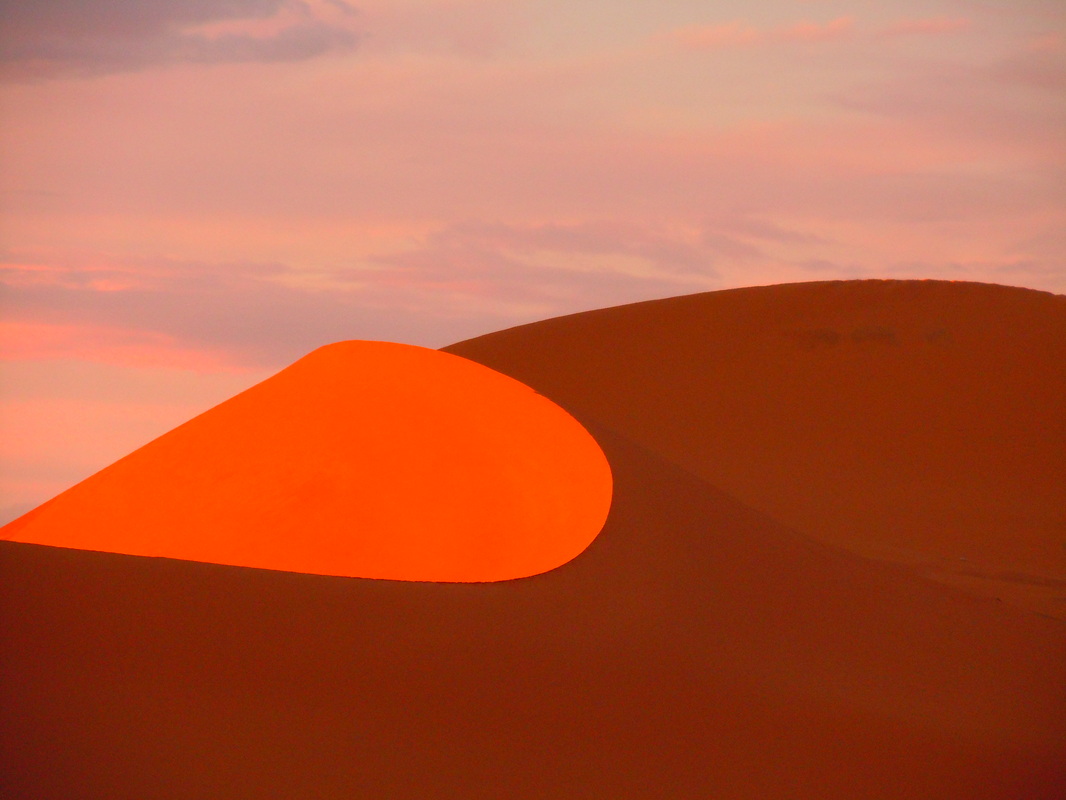
Hello, gorgeous sand dune!
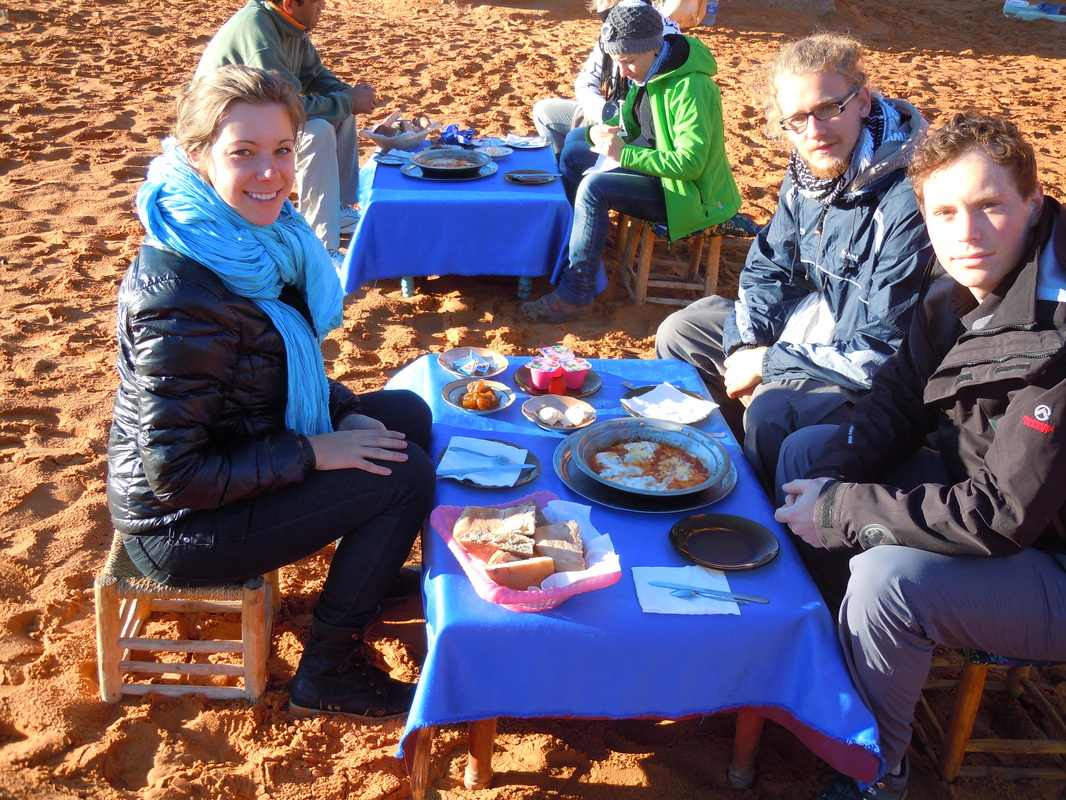
Eating a delicious Berber omelet breakfast at camp
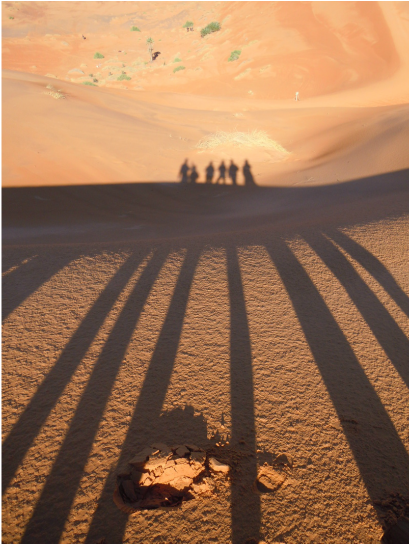
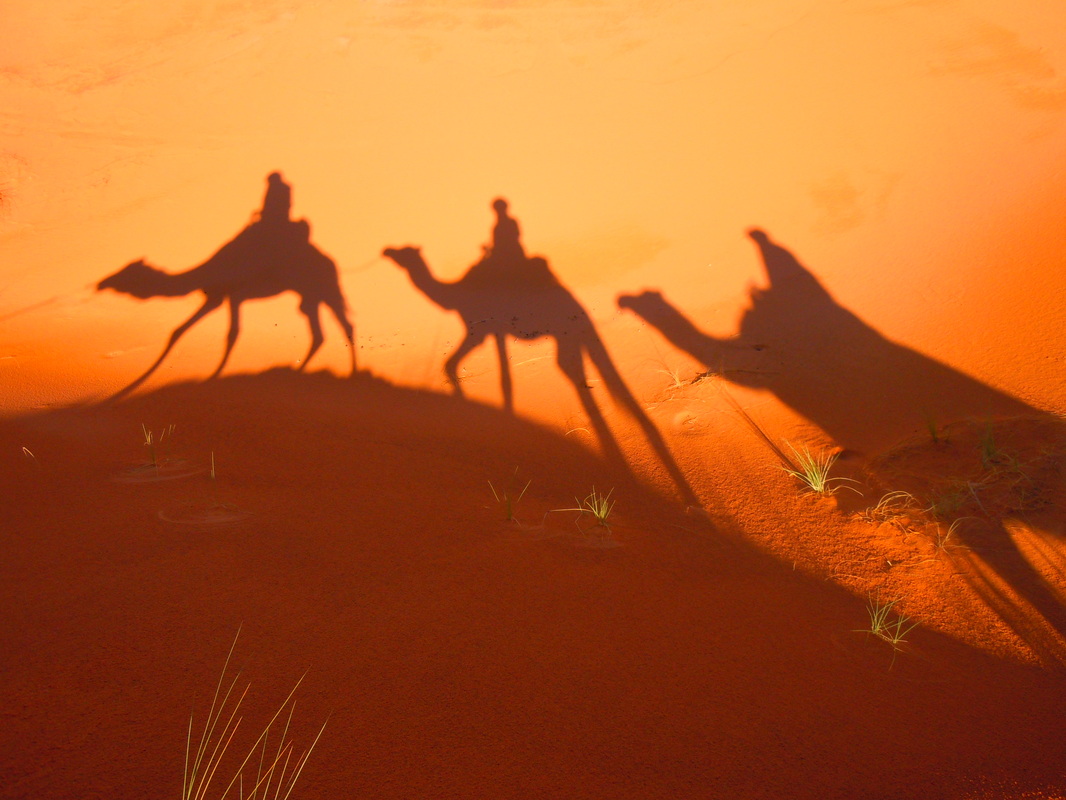
Fun shadows...us plus three other Spaniards who we met at the camp
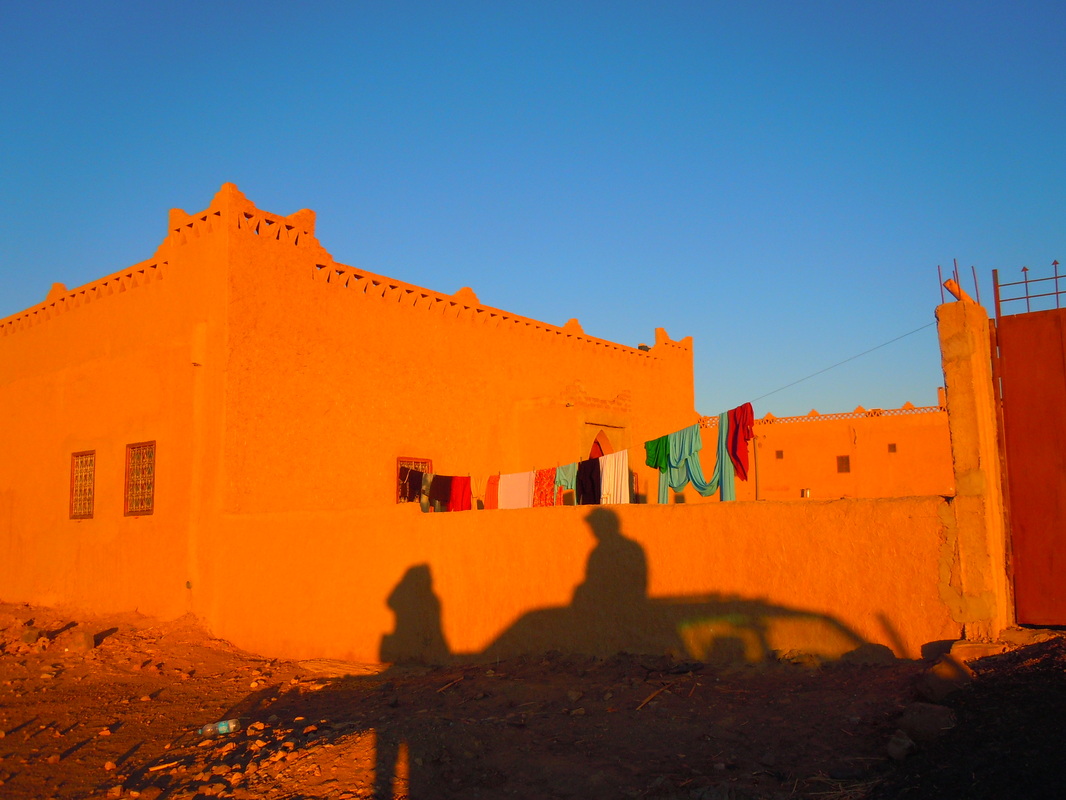
The house where we stayed...literally mud and straw made
 RSS Feed
